A Booking Is Only the Start
Before a clinician works a shift, LocumTenens.com has to verify their credentials, license them in the right state, get them privileged at the facility, and insure them. Booking takes about 72 hours. Credentials can take three months. A different team owns each step, and each one contacts the clinician.
I shadowed more than 30 people across 10+ specialties, researched the workflows and the platforms behind them, then talked to clinicians. The blueprint above is what came out of it: read across for time, down for who's involved.
Clinicians hear from too many people.
Everyone does data entry, in several tools.
Verifying credentials takes days at some sources and weeks at others.
What the Blueprint Pointed To
Eight patterns stood out once every step was on one board, and most came back to the same thing: many hands, many tools, and nobody seeing the whole file. These are the opportunities that followed, grouped four ways.
Automation
AI for clinician support, self-service, and routine messages.Template emails from Salesforce in place of personal Outlook messages.Tell every new booking what’s required, and follow up automatically.Clinician Workflow
One place for every document and conversation, so nobody asks twice.Pre-filled records that arrive complete and in one format.One real-time checklist every role sees from its own view.Clinician Experience
One point of contact for the clinician.Show clinicians where they are in the process, from the same checklist.A digital welcome packet and a better Day 1.Document Management
One document library in place of several SharePoint instances.Upload each document once.Create folders automatically for every new booking.Each Pain Point Became a Screen
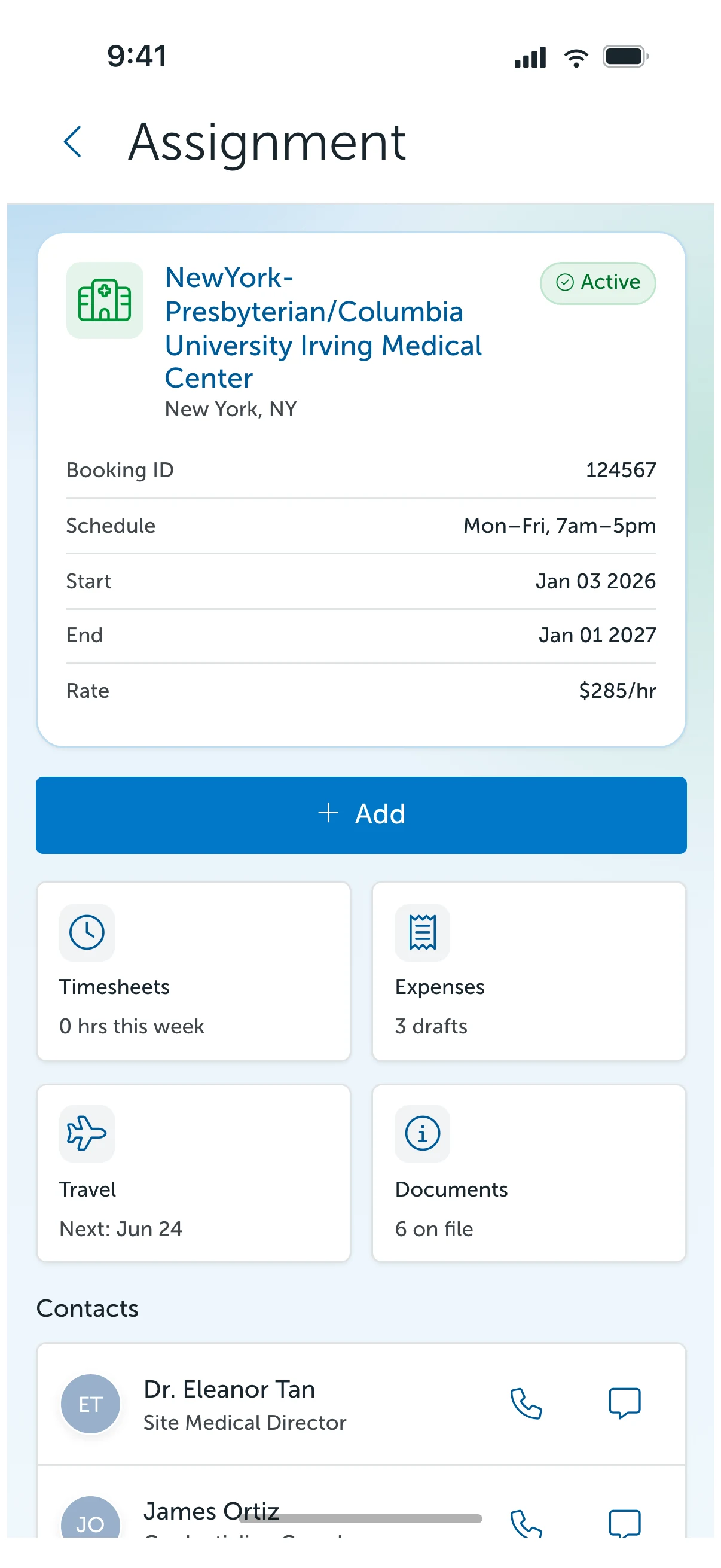
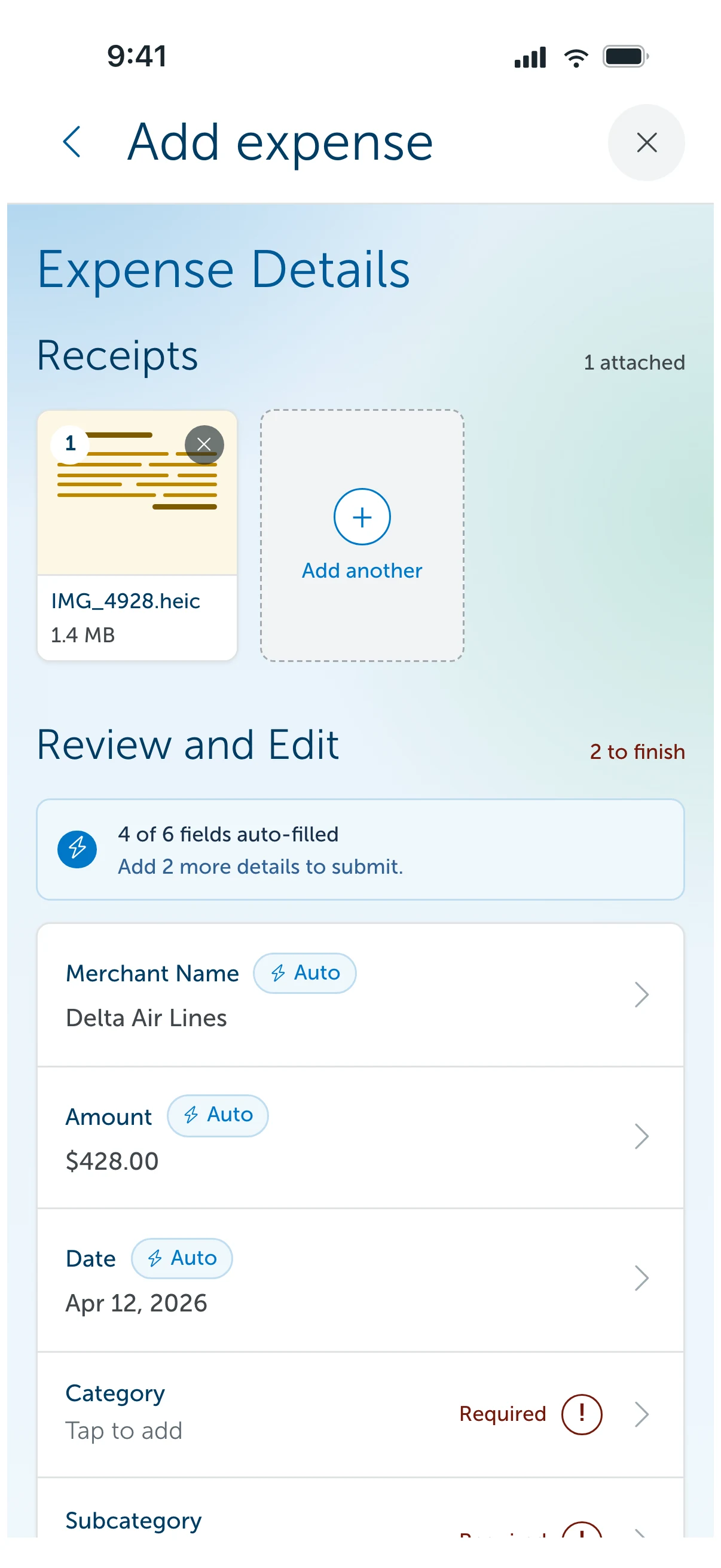
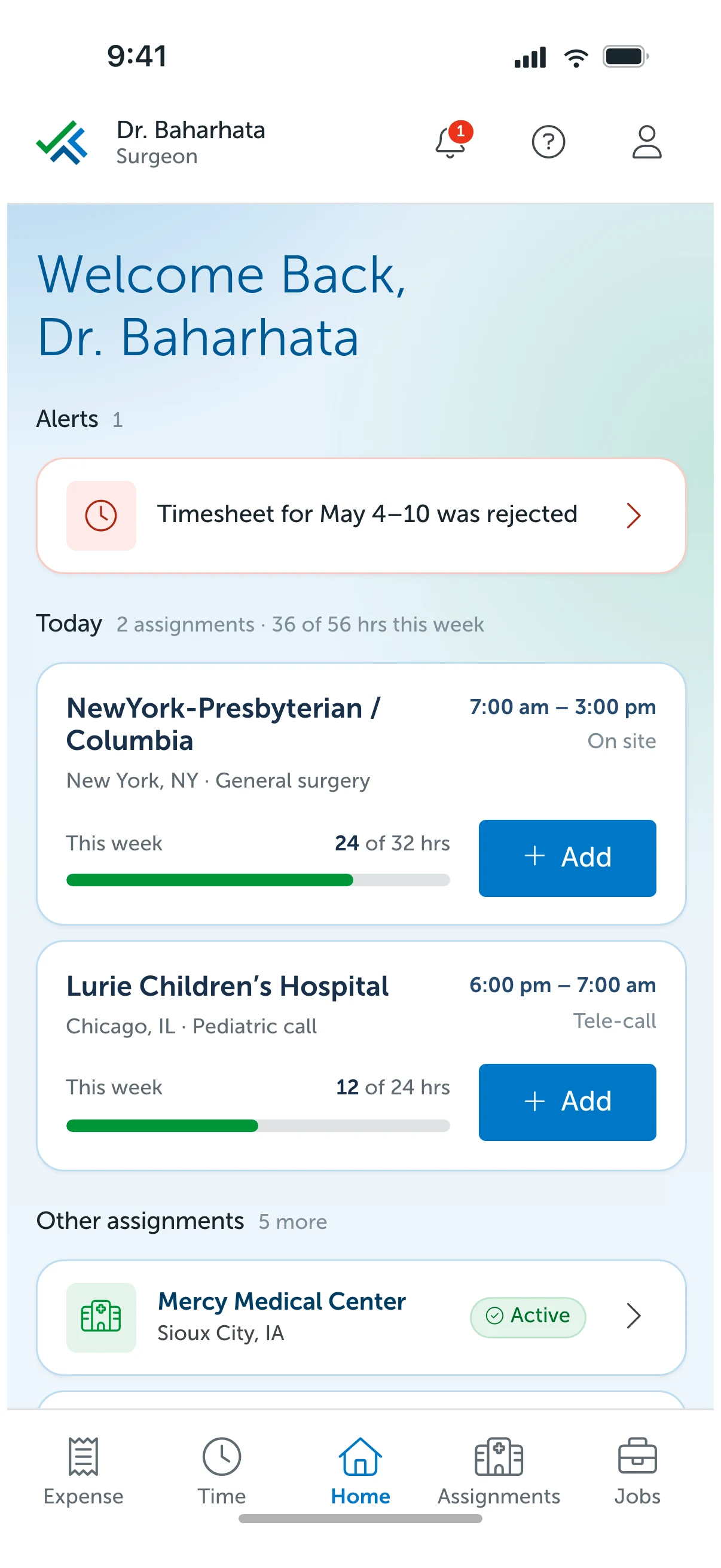
One System, Then Every Screen Onto It
There was no design system when I arrived — their first mobile app was being drawn a screen at a time. I built one in Figma for that app, then went back through the whole thing and moved the one-off styles onto it.
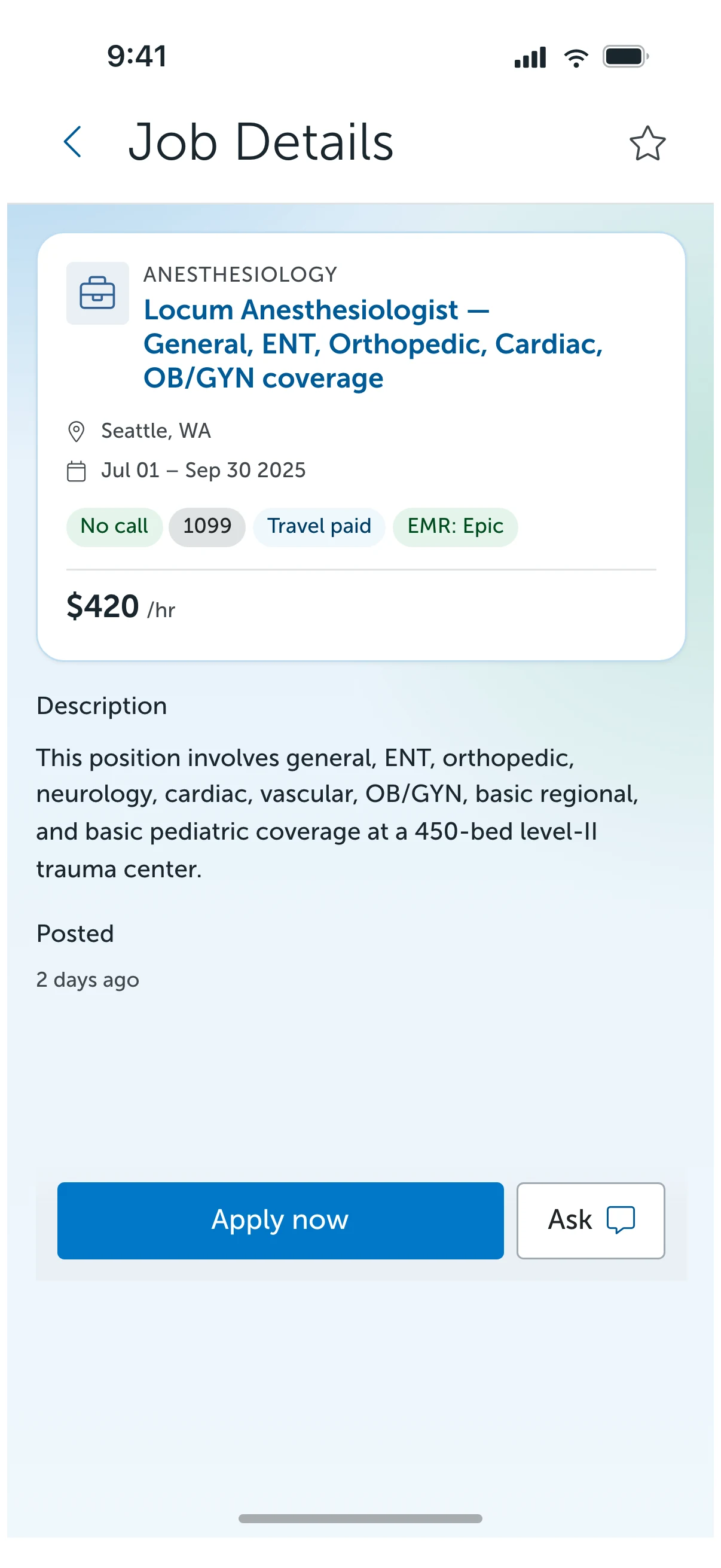
One card, one row, one chip doing three jobs, one tile in four tints, one tab bar. Drawn from the shipped app, at its own values.
The Expense Tab, Working
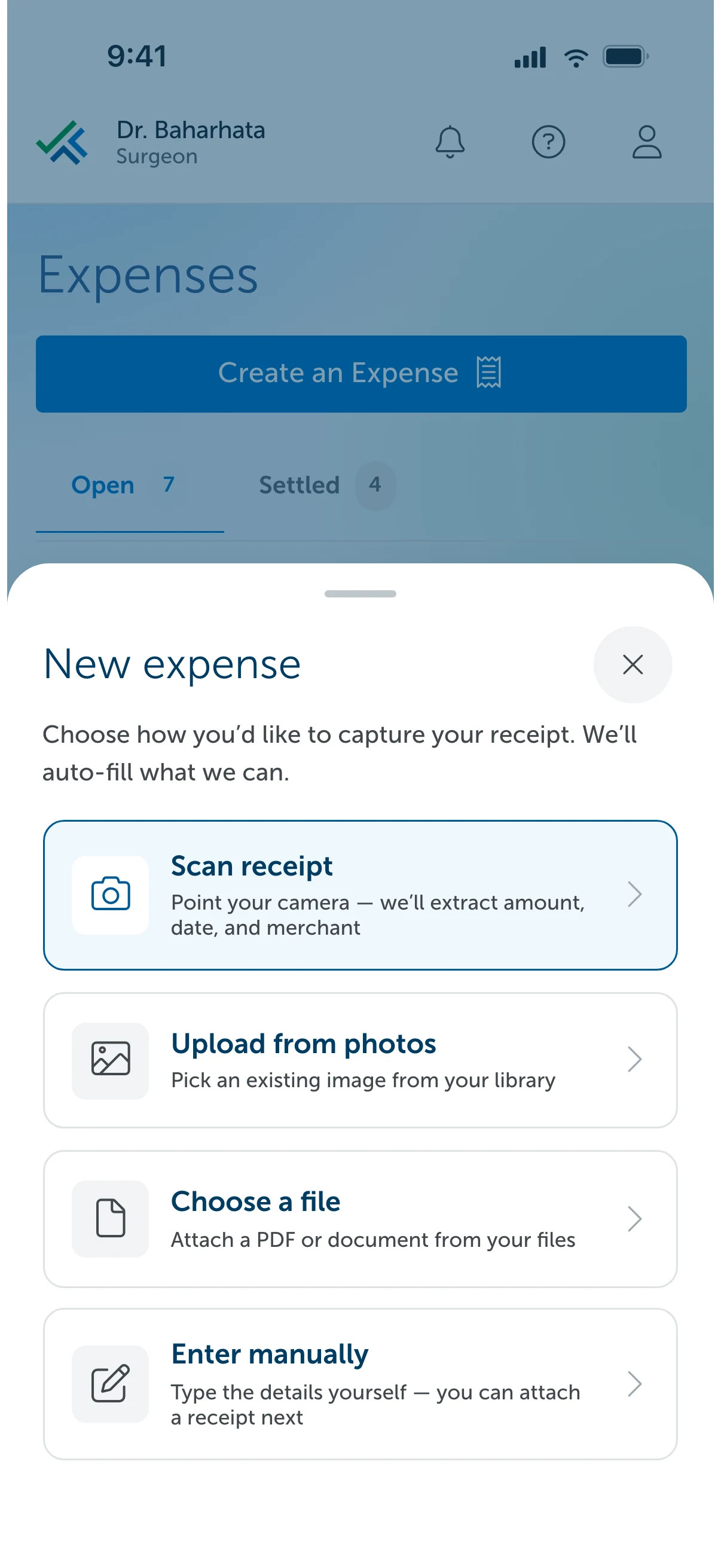
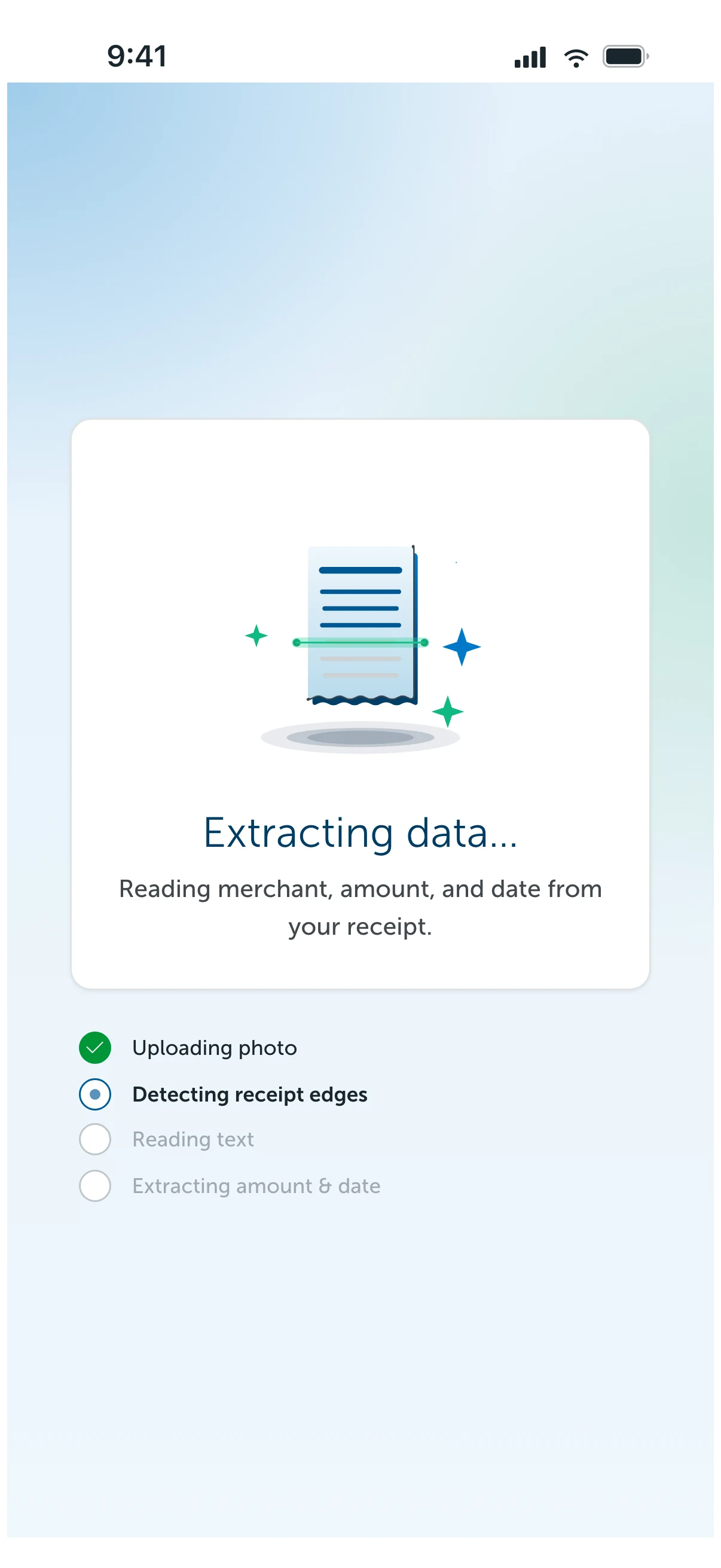
Clinicians pay for flights, hotels, rides, and meals on assignment. Create an Expense starts from a receipt: scan it, pick a photo, or choose a file, and the app fills in the amount, date, and merchant. A returned expense says why it came back.
This is the React prototype engineering builds from. Tap Create an Expense, open an expense, or go to Home.
Open it full screen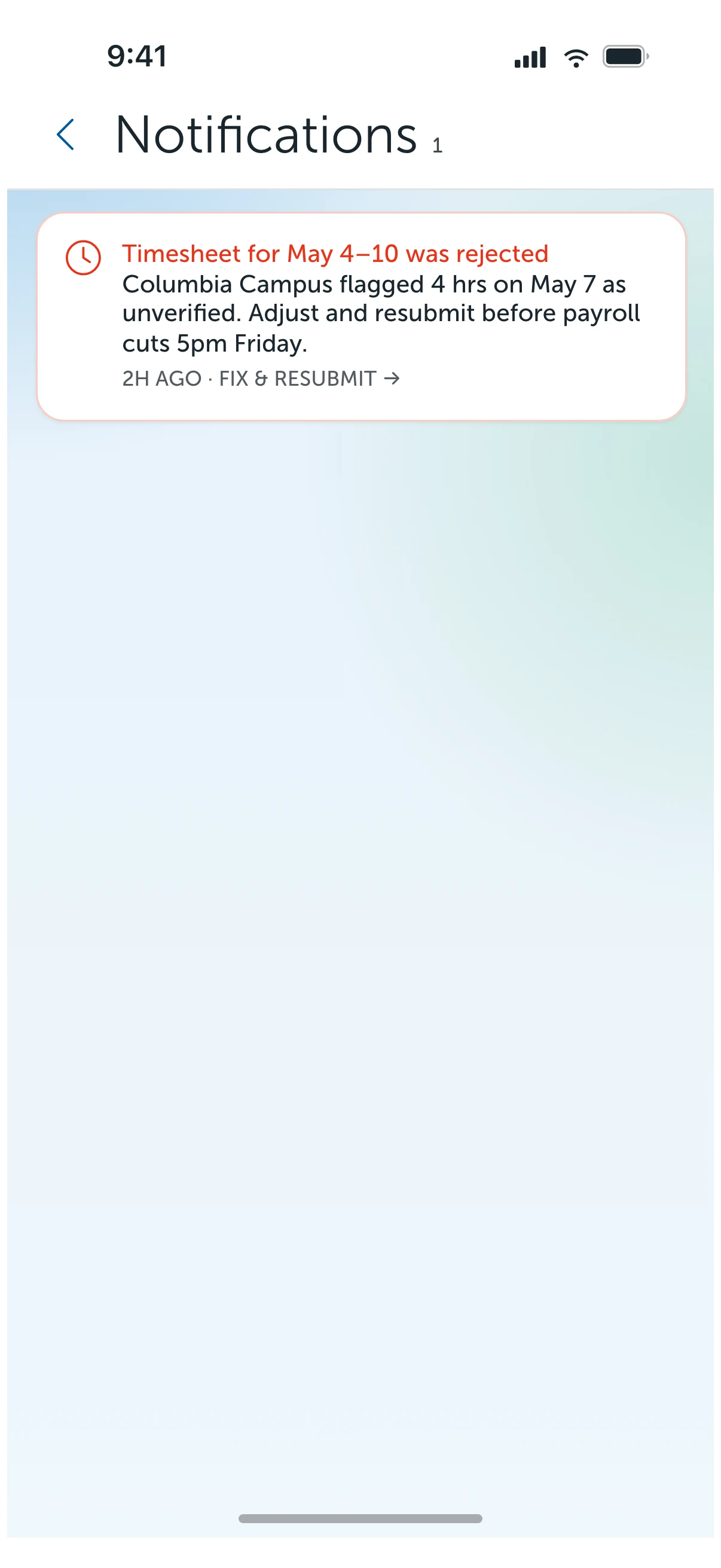
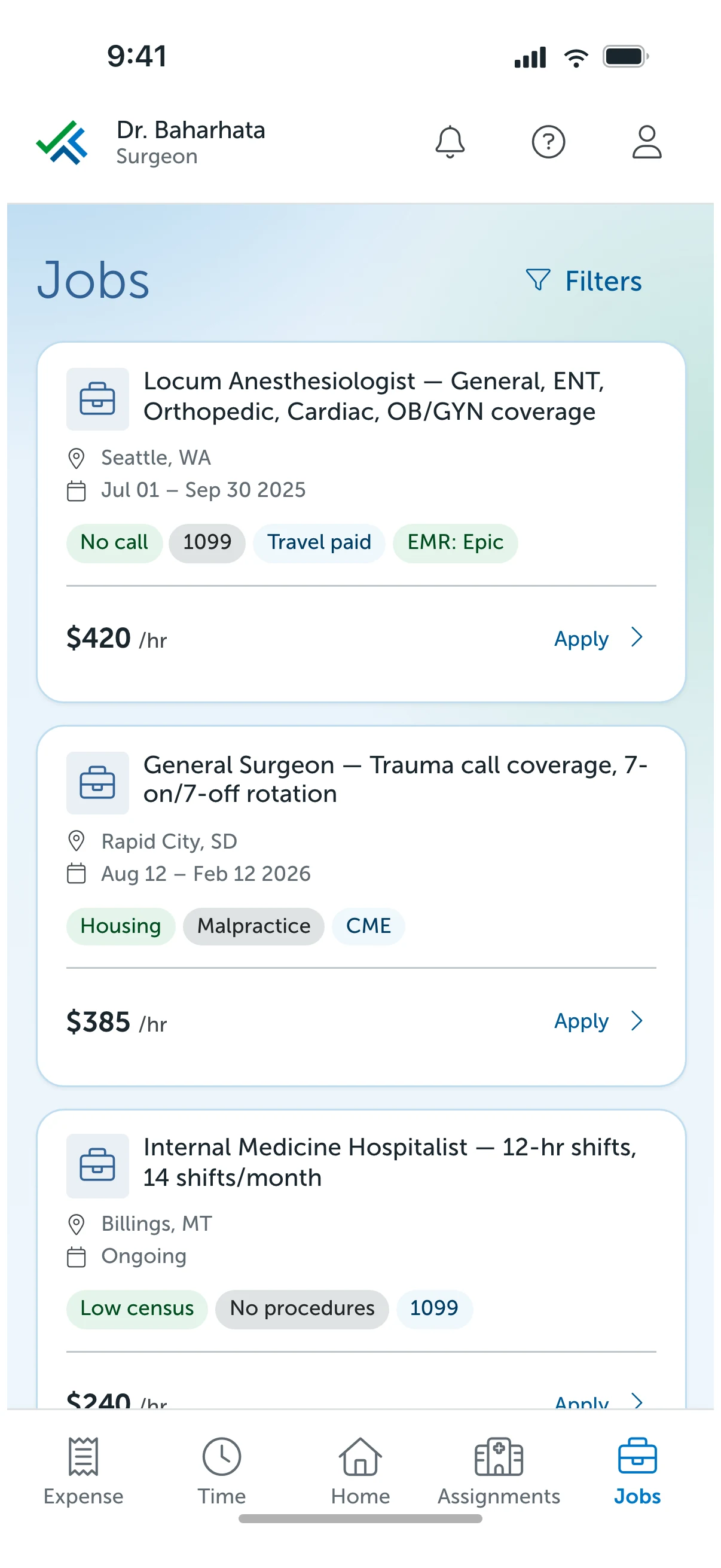
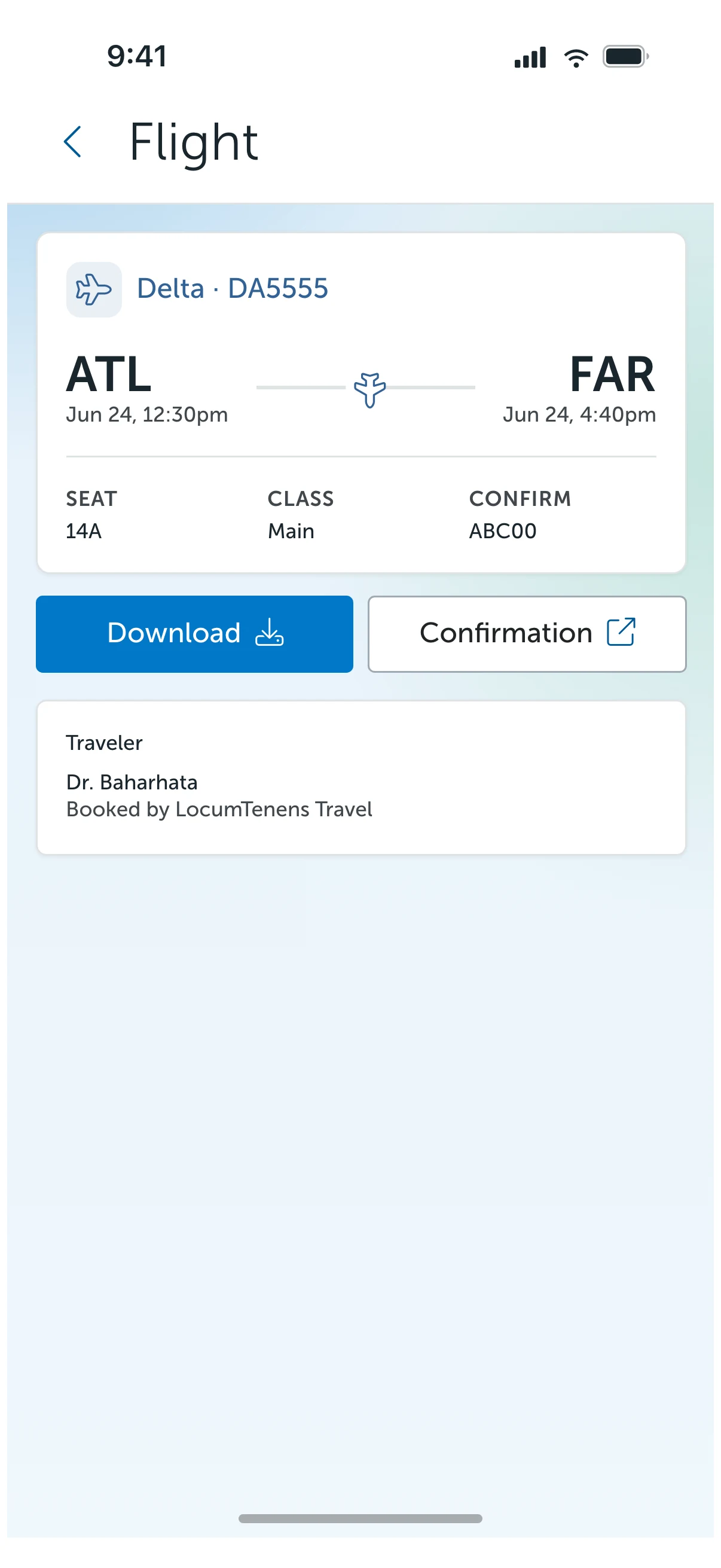
- Created the Figma design system for their first mobile app, then moved one-off styles onto it across the whole app.
- Moved the team from Figma to Claude Design, then to Claude Code, as the organization's Claude Enterprise superuser. Output doubled.
- Wrote the specs and rules, and directed the agents that built the React prototype from the real data model.
- Ran usability testing with physicians.
Engineering builds the production app from my prototype. It's the reference for every screen and flow.